
In the Southwest Metro and down through the Mankato river valley, our homes endure extreme conditions. From -30°F winter wind chills to 95°F humid July afternoons, a house shouldn’t just look beautiful—it needs to function as a high-performance machine.
At Simply Beautiful Homes, we don’t take a “one-size-fits-all” approach to insulation. Every new build, addition, and basement layout has unique physical demands. We evaluate each project situation to engineer the best thermal envelope, air barrier, and moisture control system possible.
Here is how we tailor insulation across our three primary project types to deliver unmatched comfort and long-term durability.
1. Finished Basements: Mastering the Interior-to-Exterior Transition
Basement spaces present unique building-science challenges because they interact directly with soil, concrete, and ground moisture.
- Newer Foundations: Most modern basements are built with 2″ XPS continuous rigid foam on the exterior of the concrete foundation walls. This insulates the foundation from the outside earth and eliminates the need for bulky interior wall insulation, keeping your finished basement square footage as open as possible.
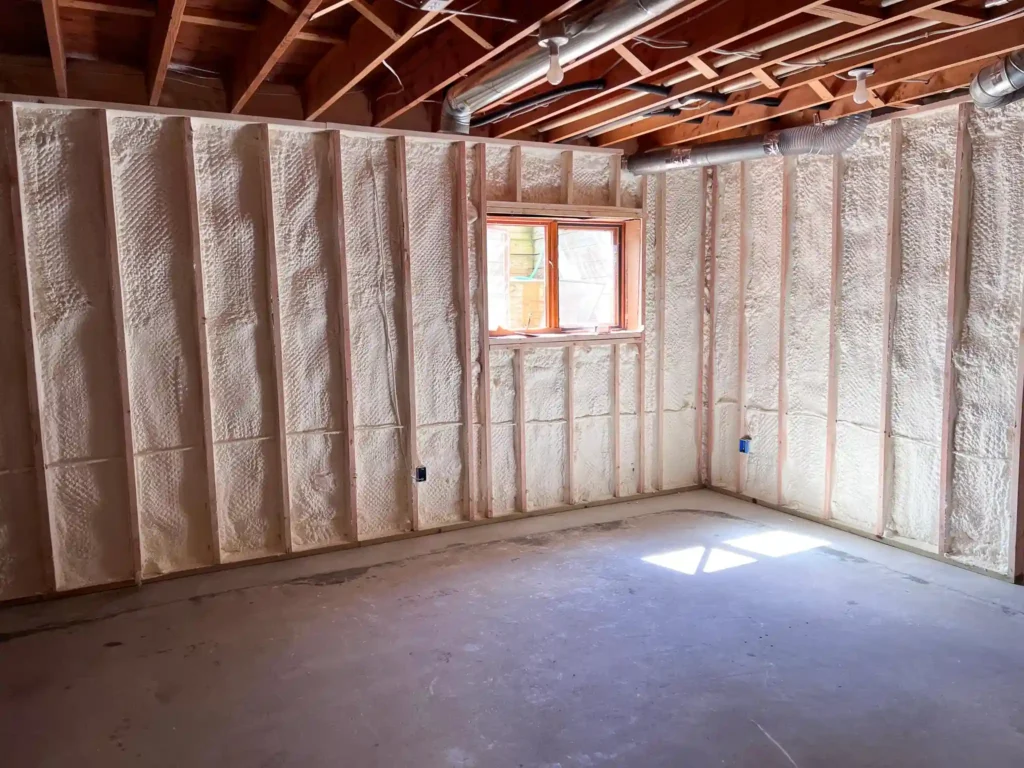
- The Critical Floor System Transition: Where exterior basement insulation meets the above-grade framing, the thermal layer must transition to the interior. The floor system and rim joists are notorious for air leaks and heat loss. We pay meticulous attention to these transition details, precision-sealing the band joist and rim cavities with spray foam or tight rigid foam detailing so there are no cold spots along your main floor line.
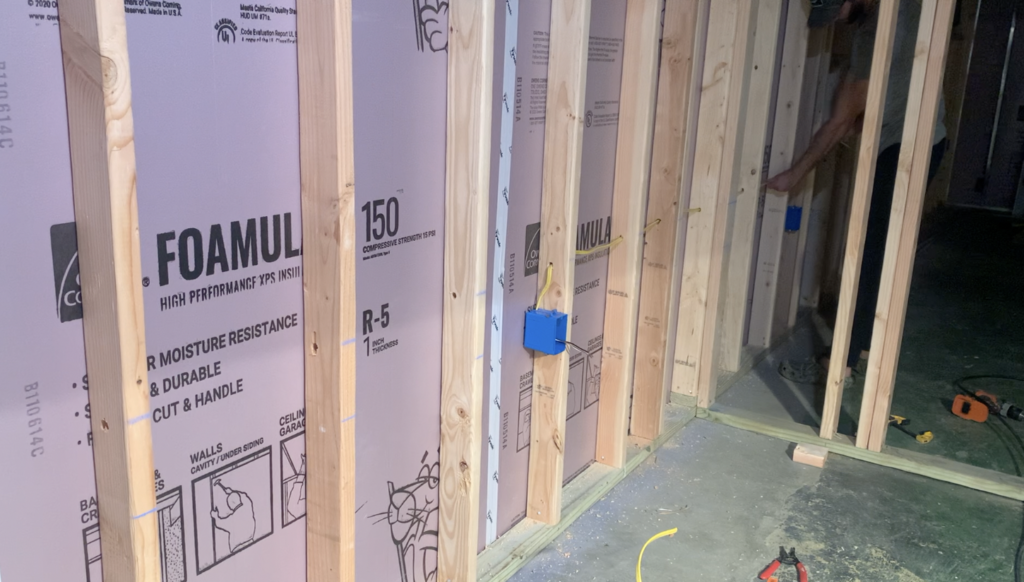
- Existing Foundations: When finishing older basements that lack exterior insulation, we install 2″ continuous XPS rigid foam directly against the interior concrete walls prior to framing. Because 2″ XPS inherently acts as its own Class II vapor retarder, it stops soil moisture from migrating inward without needing any additional plastic vapor barriers.
2. Home Additions: Unifying Existing Comfort with New Performance
Adding on to an existing home requires a delicate balance between meeting current Minnesota energy codes and maintaining consistent indoor air and temperature balance.
- Standard Additions: For typical additions, we evaluate the existing home’s assembly and match insulation types. This ensures consistent temperature control, humidity levels, and air movement across both the old and new footprints.
- Major Overhauls & Deep Additions: For large or multi-story additions, we implement more progressive building envelope systems. We bridge the gap between the original structure and the new wing with advanced air-sealing strategies, preventing drafty “connector” zones where the old roof or wall meets the new construction.
3. New Custom Homes: Progressive Building Science & “Smart” Vapor Membranes
When building from the ground up, we prioritize progressive building science engineered far beyond minimum code defaults.
- Basement Envelope: We install continuous 2″ XPS rigid insulation on the exterior of basement walls, keeping the concrete thermal mass warm and protecting foundation walls from ground moisture.
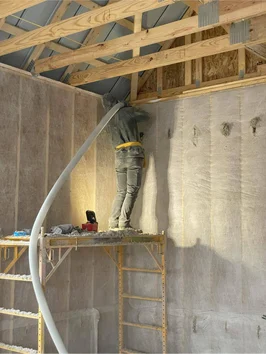
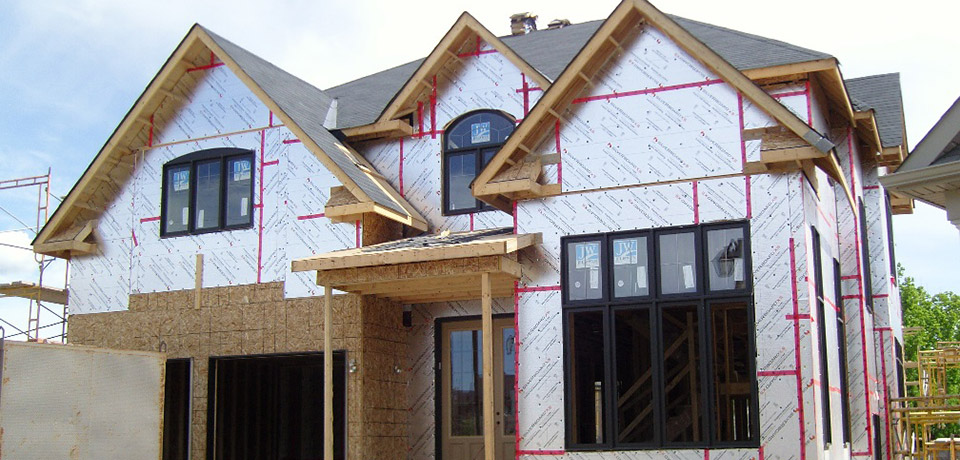
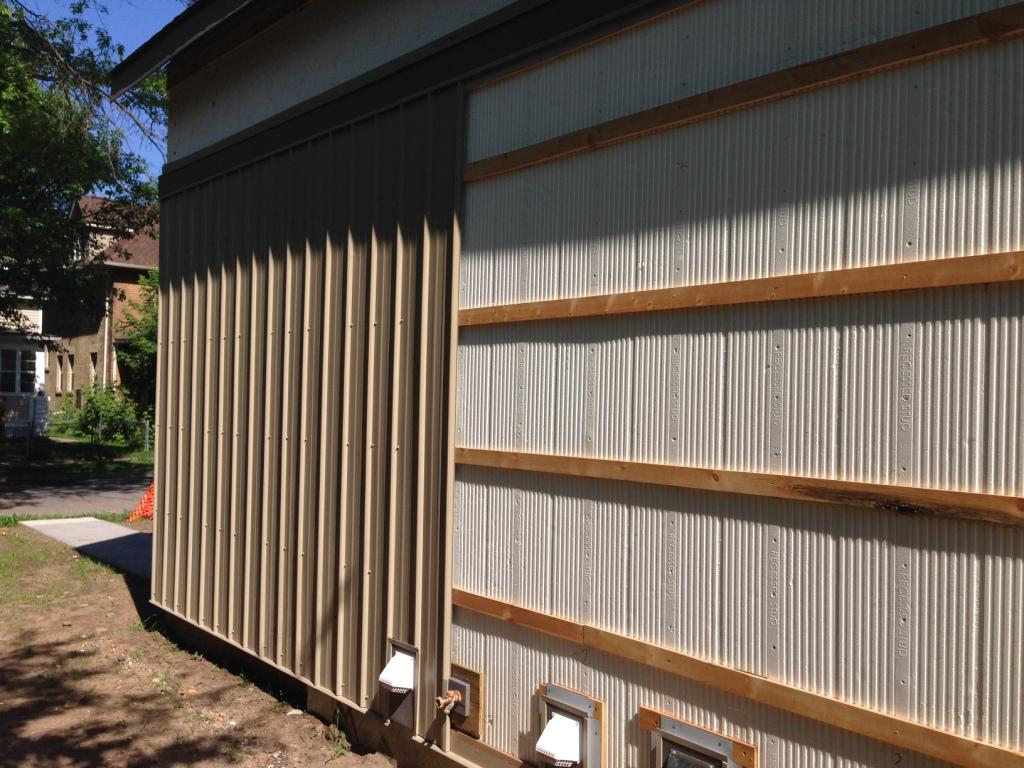
- Exterior Wall Framing & Continuous Insulation: Above grade, we insulate wood-framed walls using dense-packed cellulose, which completely fills every cavity void to block airflow. Over the exterior wood sheathing, we wrap the home in 1″ XPS rigid foam to eliminate “thermal bridging” (heat escaping through standard wall studs).
- Smart Vapor Membranes: Instead of traditional, rigid polyethylene (plastic sheeting) behind the drywall, we install smart vapor retarders. These high-tech membranes dynamically adapt their permeability based on relative humidity:
- In Winter: The membrane stays tight to block warm, moist indoor air from escaping into the wall cavity.
- In Summer: The membrane opens its pores to allow any trapped moisture to dry toward the interior of the home.
Did You Know? Simple Picture Hanging Can Threaten Traditional Vapor Barriers
Most homeowners don’t realize that standard 6-mil plastic vapor barriers can be compromised over time simply by decorating. Puncturing drywall to hang picture frames, heavy mirrors, or TV mounts punches holes straight through conventional plastic vapor barriers, creating small pathways for air and moisture vapor to leak into wall cavities.
By combining dense-packed cellulose with smart vapor membranes, the insulation layer packs tightly around mechanical penetrations and drywall fasteners. The membrane self-seals around small penetrations while allowing the wall assembly to breathe and dry naturally, protecting your home’s water and vapor management system even after you’ve moved in and hung your favorite photos.
Verified Performance: We Test, We Don’t Guess
Building science is only as good as its execution on site. To ensure every home we build performs exactly as engineered, we don’t rely solely on visual checks—we verify the envelope’s integrity using rigorous diagnostic standards:
- Blower Door Testing: Minnesota state code mandates that new homes achieve an air leakage rate of no more than 3.0 Air Changes per Hour (ACH50). By combining continuous exterior insulation, dense-packed cellulose, and smart vapor membranes, our goal on every custom home is to exceed state requirements for an exceptionally tight, draft-free envelope.
- Infrared Thermal Inspections: Before drywall goes up, thermal imaging scans help confirm that every wall cavity, rim joist, and ceiling corner is thoroughly insulated with zero missing pockets or thermal bridges.
- Long-Term Durability: By designing wall assemblies that can dry naturally in both directions, we protect structural framing from hidden moisture accumulation—ensuring long-term healthy indoor air quality and structural integrity.
The Simply Beautiful Difference: Details Matter
Insulation isn’t just about stuffing material into wall cavities—it’s about air sealing, dynamic moisture management, and carefully handling structural transitions. Whether we are finishing your basement, expanding your home with a custom addition, or building your custom home from scratch, we make sure your thermal shell is engineered for a lifetime of low energy bills, healthy indoor air quality, and year-round comfort.
Planning a build or remodeling project in the Southwest Metro? Reach out to the team at Simply Beautiful Homes to discuss how thoughtful building science can make your dream home warmer, quieter, and more efficient.